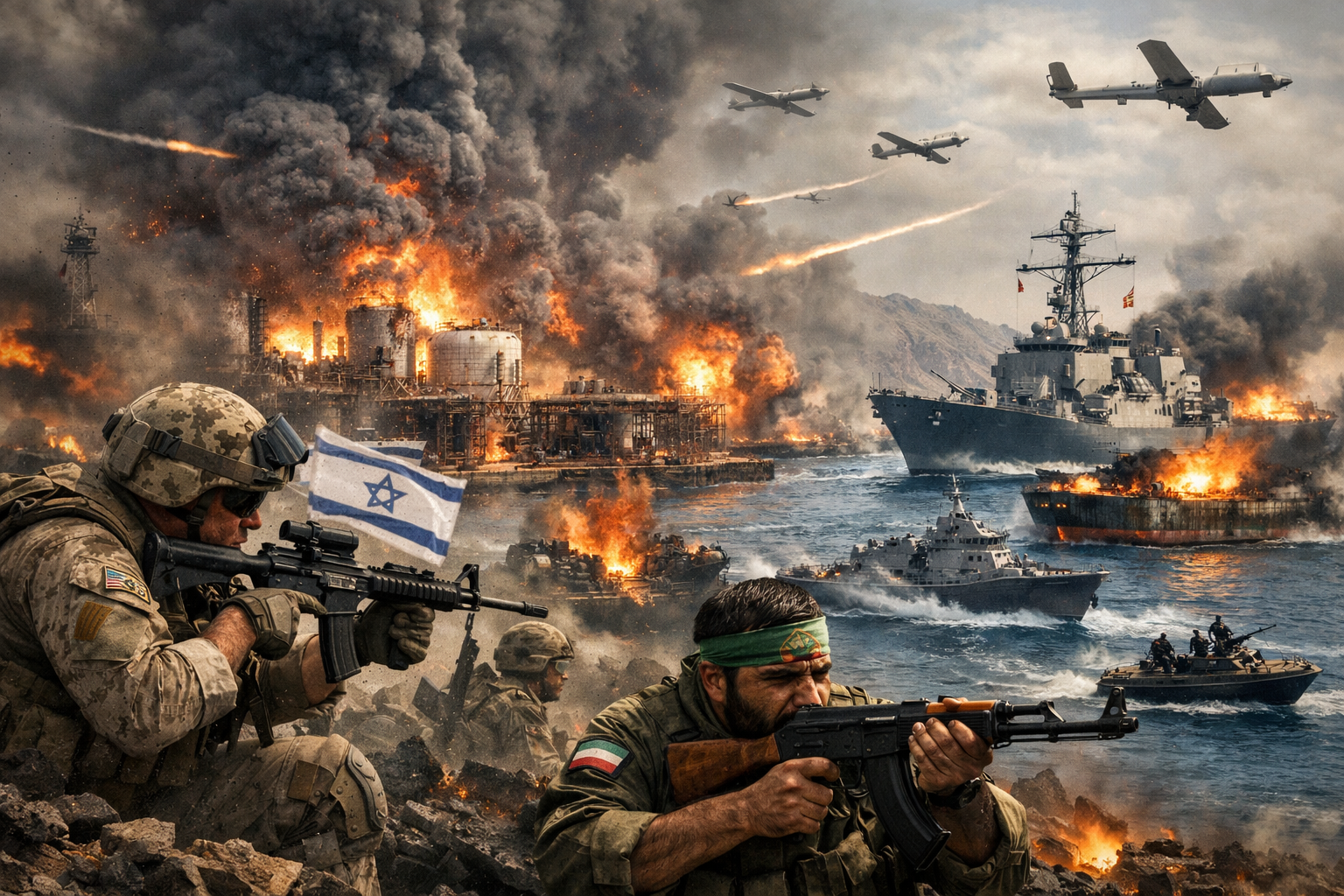
The U.S.-Israeli war against Iran has now entered its third week, yet there is still no clear prospect of an end.
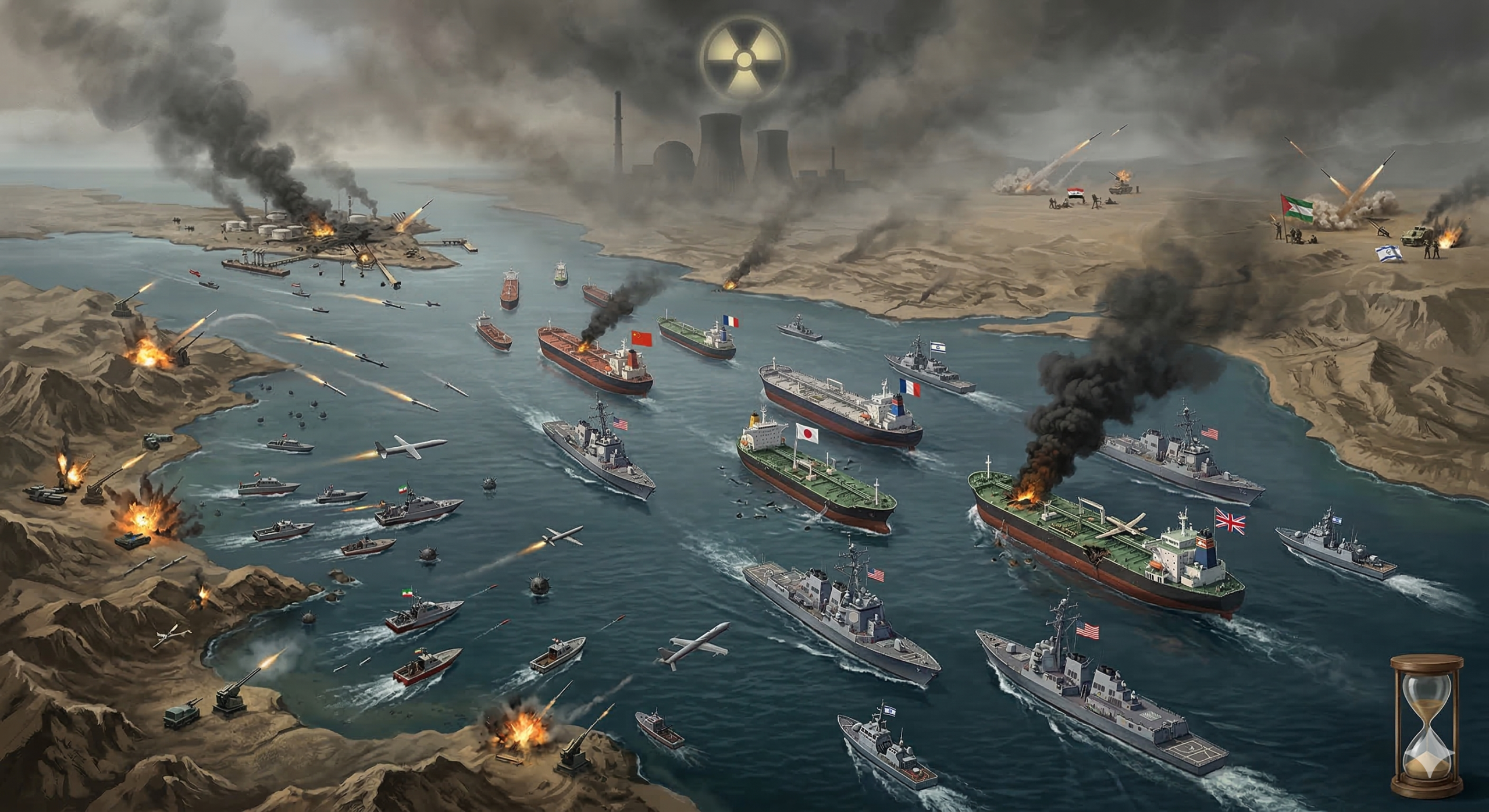
On March 13, the United States launched airstrikes on Kharg Island, the critical hub through which roughly 90% of Iran’s crude oil exports pass.
On his social media platform Truth Social, President Donald Trump claimed that “all military targets” had been “completely destroyed,” while also saying that, “for reasons of decency,” he had refrained from striking the island’s oil infrastructure.
At the same time, he warned that if Iran or other actors interfered with the free and safe passage of ships through the Strait of Hormuz, he would “immediately reconsider” that decision.
Iran quickly responded. On March 14, Iranian Foreign Minister Abbas Araghchi claimed that the attack on Kharg Island had been launched from the United Arab Emirates (UAE), and declared that Iran would retaliate by destroying energy infrastructure owned by U.S. companies.
That same day, the UAE’s oil export hub at Fujairah was struck by drones, heightening concerns about disruptions to global energy supplies.
Also on March 14, Trump wrote on Truth Social that countries affected by Iran’s attempt to block the Strait of Hormuz—including China, France, Japan, South Korea and the United Kingdom—should send warships to help reopen the sea lanes.
So far, however, responses from those countries, including Japan, have remained cautious.
In an interview with the Financial Times on March 15, Trump said that “people who benefit from the Strait of Hormuz should cooperate to make sure nothing bad happens there.”
He also warned that if allies offered “no response or a negative response,” it would be “very bad for the future of NATO.”
Asked what kind of support he expected, Trump replied “whatever it takes,” suggesting not only minesweepers but also command teams capable of striking hostile actors along the coast.
Trump also argued that China should participate.
“China should help too,” he said, noting that “90% of their oil comes through the Strait.”
He added that he wanted an answer before his planned visit to China at the end of March, saying that waiting two weeks would be “too long.”
In Japan, Takayuki Kobayashi, policy chief of the ruling Liberal Democratic Party, said on an NHK program on March 15 that escorting ships through the Strait of Hormuz with Japan’s Self-Defense Forces would face “very high hurdles.”
Meanwhile, the Wall Street Journal reported on March 15 that “the Trump administration as soon as this week plans to announce that multiple countries have agreed to form a coalition that will escort ships through the Strait of Hormuz.”
In this context, what kind of cooperation Japan could provide is likely to become a key topic when Prime Minister Sanae Takaichi visits Washington on March 19.
The fact that escorting vessels through the Strait of Hormuz is now emerging as the top priority suggests that even Trump now assumes the war with Iran—and its effects on oil markets—could be prolonged.
What miscalculations might the United States and Israel have made?