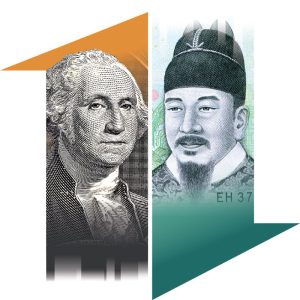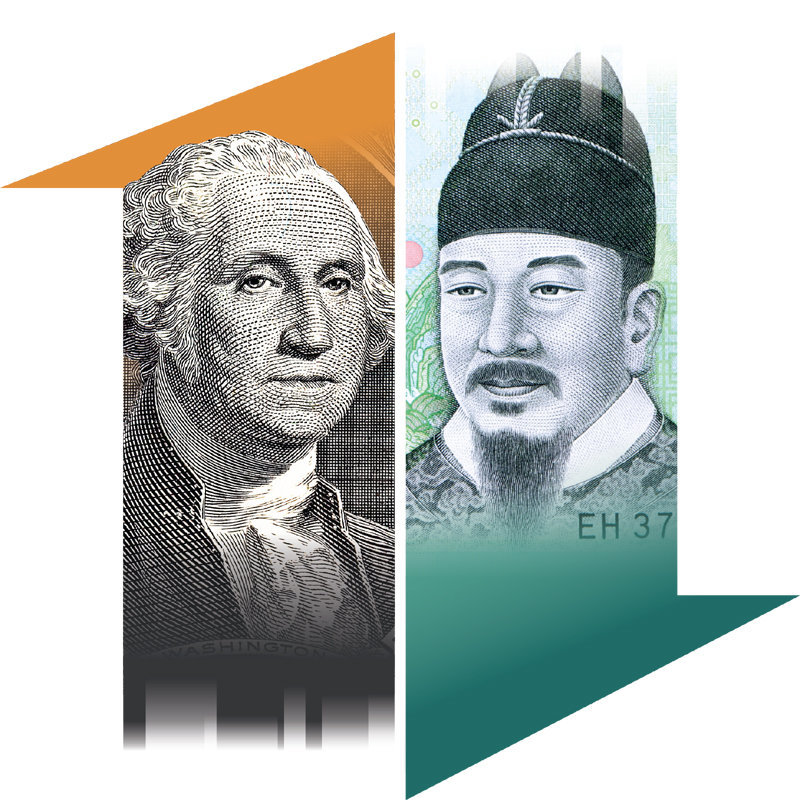
As the Won nears 1,500 to the Dollar, a generation loses faith in the domestic market and capital flees across the Pacific.
“Is the U.S. Dollar the only thing left to believe in?”
In the sleek cafes of Seoul, young people are no longer scrolling through job boards.
Instead, their eyes are glued to real-time charts of the Nasdaq and the S&P 500.
This is the new everyday reality in South Korea.
While the government maintains the mantra that “economic fundamentals remain sound,” the market tells a grimmer story.
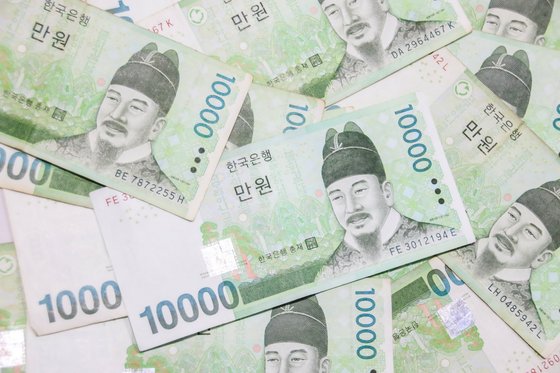
The Korean Won has recently flirted with the 1,480 mark against the U.S. Dollar—a level of volatility not seen since the 2008 Global Financial Crisis.
It raises a haunting question: How can a nation that leads the world in cutting-edge semiconductors be so powerless to protect its own currency?
The “Glass Castle”:
Export Dependency and Youth Despair
The structural Achilles’ heel of the South Korean economy is a stark imbalance: it is a powerhouse abroad but hollow at home.
The Fragility of Trade:
South Korea’s trade dependency ratio (exports and imports relative to GDP) exceeds 70%.
This makes the nation a “glass castle”—an economy that can be shattered by a single shift in U.S. trade policy or a new round of protectionist tariffs.

A Generation in Retreat:
The “real” unemployment rate among university graduates is estimated to be nearing 20%.
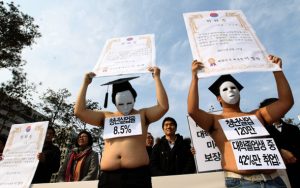
For those who fail to squeeze into the elite ranks of the Chaebols (conglomerates like Samsung or Hyundai), the future offers only precarious, low-paying contract work.
With little hope for growth at home, retail investors—known locally as “Seohak Ants” (Western-learning Ants)—are dumping the Won to hoard U.S. stocks like Nvidia and Tesla.
This creates a “Despair Spiral”:
the more citizens lose faith in their country, the more capital they move abroad, further devaluing the currency and deepening the crisis.
The “Credit Wall”:
Why the Won isn’t Gold
Despite its technological prowess, South Korea faces a persistent “Credit Wall.”
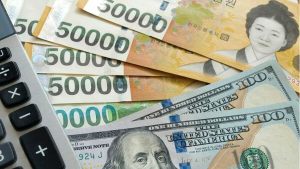
Because its domestic capital market remains relatively shallow, Korean firms are often forced to borrow heavily in Dollars on the international market.
Lender vs. Borrower:
There is a fundamental difference in status between the Japanese Yen and the Korean Won.
Japanese banks are global “lenders” of capital; Korean banks are “borrowers” who must constantly secure Dollar liquidity to stay afloat.
The Coupon Analogy:
Think of the Japanese Yen as “Solid Gold”—a safe-haven asset recognized globally.
In contrast, the Korean Won acts more like a “Premium Gift Voucher” valid only within a specific theme park.

The moment investors scent a global recession, they lose interest in the “voucher” and scramble for the only thing that matters: hard cash (U.S. Dollars).