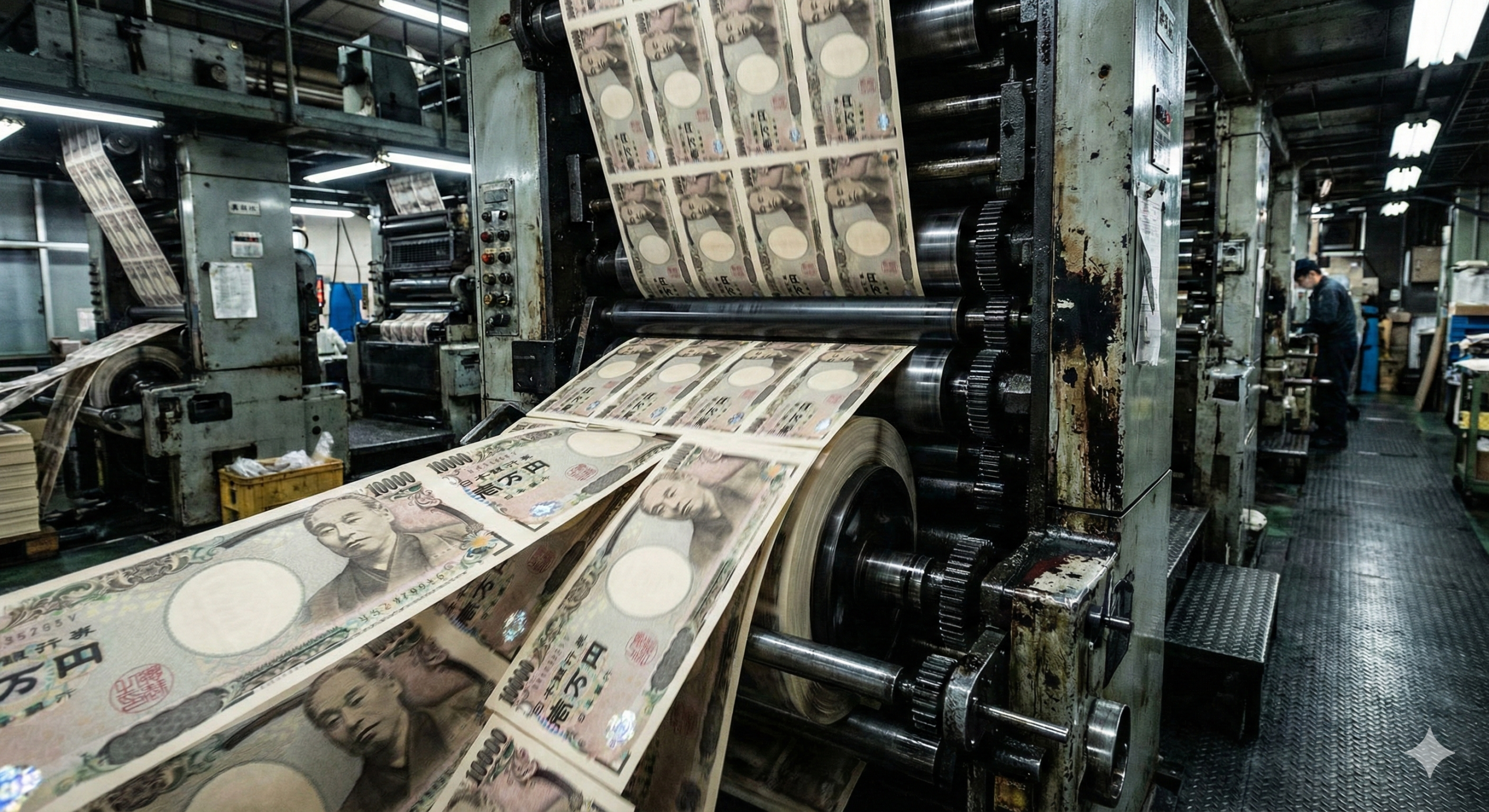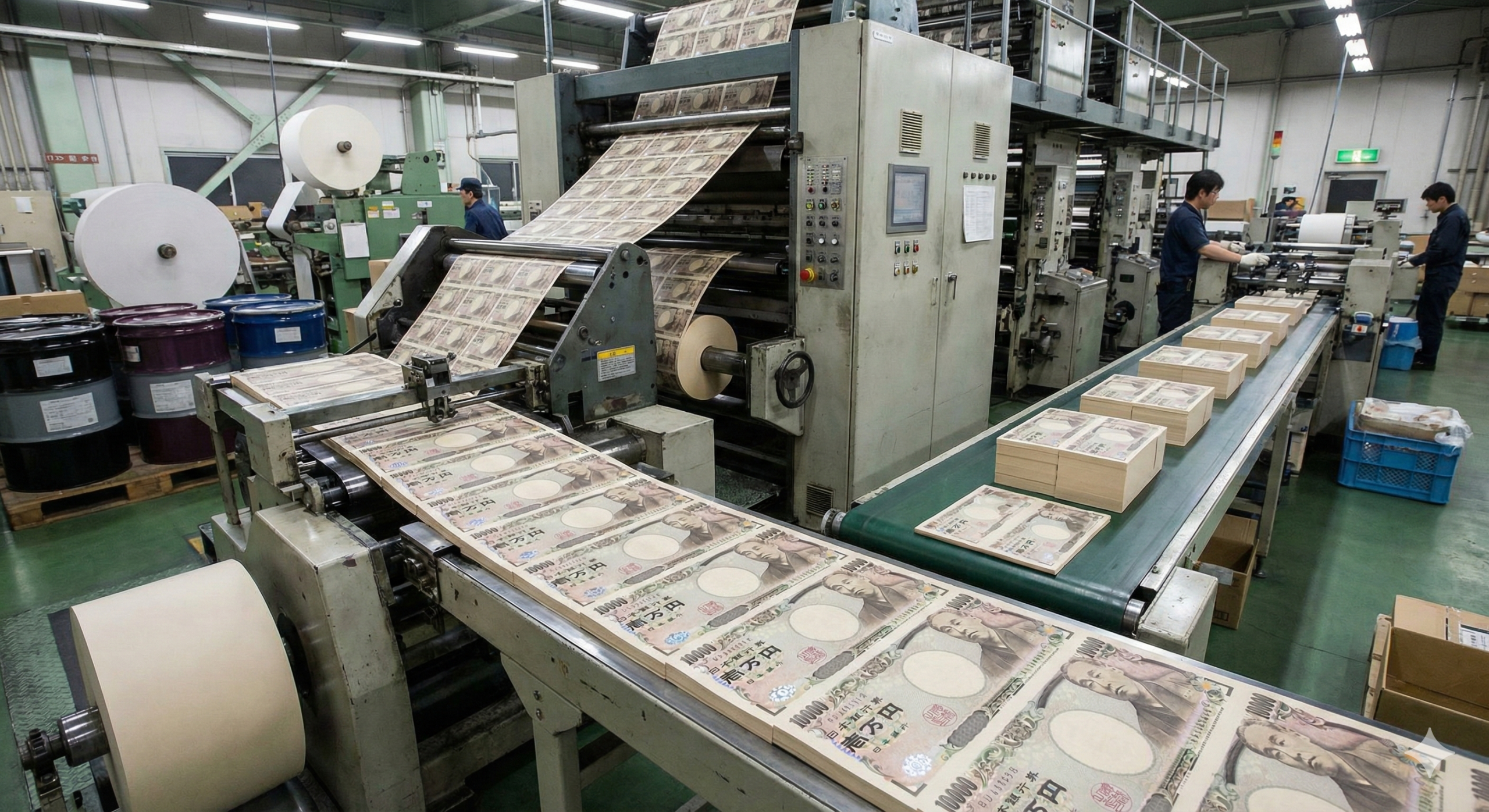
Recently, a scholar appeared on a Japanese TV program and made a spirited, seemingly undeniable argument:
“It costs the Bank of Japan (BOJ) only 20 yen to print a single 10,000-yen note. That means every time they print one, a profit of 9,980 yen is born. Therefore, we should just keep printing. If we do, Japan’s financial collapse is impossible.”
It was a satisfying, punchy soundbite.
If true, it would seem to solve all our worries.
Yet, as I listened, a nagging doubt remained.
Is there really such a thing as a free lunch?
I decided to run this theory by an acquaintance who works in the research department of a major bank.
His response was surprisingly cold—and enough to send a chill down my spine.
What follows is a look at the common misconceptions surrounding money creation (seigniorage) and the reality behind them. I hope you’ll enjoy this brief dive into monetary mechanics over your weekend coffee.
“Printing Money” is Only Half the Story